Running Google Ads can feel promising at first. You launch a campaign, traffic starts coming in, clicks go up and your reports look active. On the surface, it seems like your marketing is doing exactly what it should. But then the real question arrives. Why are those clicks not turning into strong leads?
This is one of the most common frustrations for businesses investing in paid search. You are paying for visibility, people are landing on your website, but the enquiries coming through are weak, irrelevant or simply not ready to buy. In some cases, there are plenty of clicks and barely any leads at all. In others, the leads come in, but they are not the right fit for your product or service.
The truth is that clicks alone mean very little if they are not connected to genuine buying intent. Google Ads can absolutely generate high quality leads, but only when the strategy behind them is built properly. If your campaigns are attracting the wrong people, the issue is rarely just the ads themselves. More often, it is a deeper problem with targeting, messaging, landing pages or the journey that happens after the click.
Clicks are easy. Quality is harder
A click is a moment of interest. A quality lead is a person with a genuine need, realistic intent and a strong chance of becoming a customer.
Those two things are not the same.
Many businesses focus too heavily on getting traffic and not enough on what kind of traffic they are attracting. A high click through rate can look impressive in a report, but it does not always mean your campaign is healthy. In fact, some ads perform well on paper while quietly wasting budget on people who were never going to convert in the first place.
The goal of Google Ads should never be more clicks for the sake of it. The goal should be more relevant clicks from people who are actually likely to take action.
You are targeting keywords that are too broad
One of the biggest reasons Google Ads campaigns bring in poor quality traffic is broad keyword targeting. If your keywords are too general, your ads can appear for searches that are loosely related to your business but not commercially valuable.
For example, a business offering premium website design services should not be attracting people searching for free website templates or beginner website tips. A legal services firm should not be paying for clicks from users looking for general legal definitions rather than real help.
When keyword targeting is too broad, Google may drive volume, but the traffic is often diluted. You get visitors who are browsing, researching or simply curious, rather than people who are ready to enquire.
The fix is not always spending more. It is often getting more specific. High intent keywords usually reveal stronger commercial value because they show what the user actually wants.
Your ad copy is attracting the wrong audience
Even if your keywords are decent, your ad copy might be sending the wrong signal.
Good ad copy does more than generate interest. It qualifies the user before they click. It should give enough clarity that the right people feel encouraged to take the next step, while the wrong people filter themselves out.
When ads are too vague, too generic or too focused on sounding impressive, they often attract curiosity rather than intent. People click because the message is broad enough to appeal to almost anyone, but once they arrive on the page, they realise it is not actually what they need.
Strong ad copy should reflect the offer clearly. It should speak to a specific pain point, set realistic expectations and guide the right audience forward. Sometimes a slightly lower click through rate leads to far better lead quality because the traffic is more relevant.
Your landing page is breaking the momentum
A great ad can still fail if the landing page does not support it.
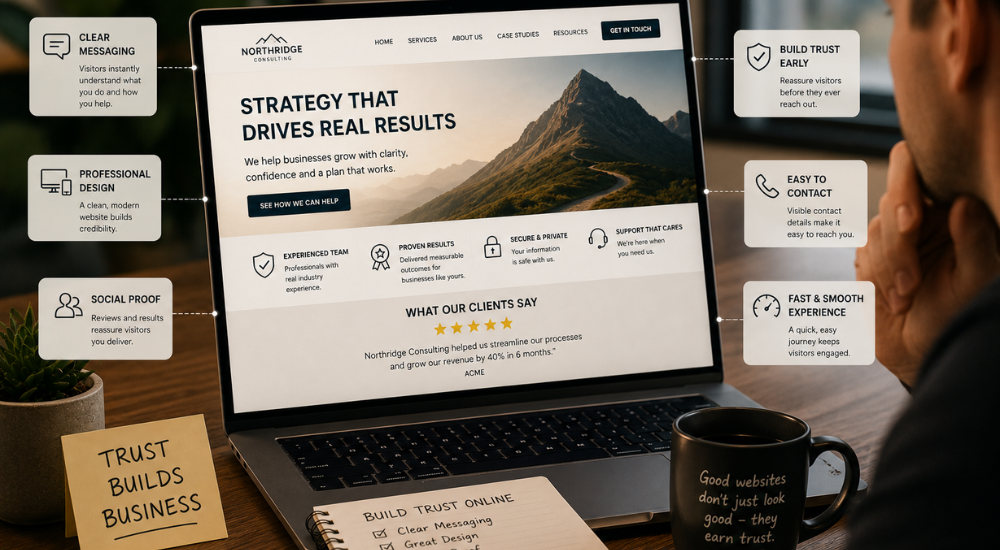
This is where many campaigns lose potential customers. Someone clicks because the ad speaks to their need, but when they arrive on the page, the experience feels confusing, slow or disconnected. The message changes. The offer is unclear. The design does not inspire trust. The call to action is weak. In a matter of seconds, the user loses confidence.
A landing page should feel like a natural continuation of the ad, not a separate experience. The headline should align with what was promised. The content should be focused and easy to scan. The page should answer key questions quickly and make the next step feel obvious.
If you are sending paid traffic to a homepage or a cluttered service page, you may be creating unnecessary friction. Google Ads performs best when every click lands in the right environment.
You are missing negative keywords
Negative keywords are one of the most overlooked tools in Google Ads, yet they are crucial for lead quality.
They help prevent your ads from appearing for irrelevant searches. Without them, your campaigns can show up for terms that waste budget and attract the wrong kind of traffic.
This matters more than many businesses realise. A few irrelevant searches here and there may seem harmless, but over time they eat into spend, distort performance data and flood your funnel with low value enquiries.
A well managed Google Ads account is not just about what you target. It is also about what you deliberately exclude.
Your conversion process is too weak
Sometimes the ads are fine and the traffic is relevant, but the way you collect leads is the real problem.
If your form asks for too much too soon, users may leave. If your website does not clearly explain what happens after submission, people may hesitate. If your calls to action are passive or unclear, potential customers may never take the next step at all.
And then there is follow up. Even a strong lead can go cold if your team takes too long to respond.
Google Ads can bring the right people to your door, but if the handover from click to enquiry is weak, quality still suffers. Lead generation is not only about getting attention. It is about capturing intent while it is still warm.
You are measuring the wrong success metrics
Many businesses judge Google Ads performance by surface level numbers. Clicks, impressions and traffic all have their place, but they do not tell the full story.
The real measure of success is whether the campaign is producing valuable business outcomes. Are the enquiries relevant? Are they converting into sales? Are they coming from the right audience? Are you seeing real return on investment?
Without proper conversion tracking and lead quality analysis, it is easy to keep funding campaigns that look busy but do not actually move the business forward.
If your Google Ads are bringing clicks but not quality leads, the answer is not always to spend more. In many cases, the smarter move is to step back and look at the full journey.
The keywords may be too broad. The ad messaging may be attracting the wrong audience. The landing page may be creating friction. The lead capture process may be too weak. Or the campaign may be optimised for activity instead of actual results.
Google Ads works best when strategy, messaging and user experience all work together. When they do, paid search becomes more than a traffic source. It becomes a reliable engine for high quality growth.
At iHeartMedia South Africa, we help businesses build Google Ads campaigns that do more than generate clicks. We focus on attracting the right audience, improving conversion journeys and turning ad spend into meaningful enquiries.
Ready to stop paying for the wrong clicks and start generating better leads? Get in touch with iHeartMedia South Africa today and let us build a smarter Google Ads strategy for your business.