Generating a lead is only the beginning. What happens next is often what determines whether that lead becomes a customer or disappears into silence.
Many businesses invest heavily in websites, digital ads and social media to attract enquiries, but then lose momentum in the follow up stage. Messages sit unanswered for too long. Emails go out with no warmth. Calls are delayed. The lead goes cold. By the time someone reaches out, the potential customer has already moved on or chosen a competitor who responded faster.
Speed matters. But so does the way you respond.
This is where many businesses struggle. They know they need to follow up quickly, but they do not want the process to feel robotic or impersonal. They want efficiency, but they also want genuine connection. The good news is that you do not have to choose one or the other. With the right approach, you can follow up leads faster and still sound like a real human being.
At iHeartMedia South Africa, we see this challenge all the time. Businesses work hard to generate interest, only to lose opportunities because the follow up process lacks structure, speed or warmth.
Why speed matters so much
When someone fills in a form, sends a WhatsApp message or requests a quote, they are usually acting in a moment of active interest. They are thinking about their problem right now. They are comparing options right now. They are deciding who to trust right now.
That window matters.
The longer a business takes to respond, the more that initial momentum fades. A delayed reply gives the lead time to lose focus, second guess their interest or enquire elsewhere. Fast follow up helps you meet the person while their intent is still fresh.
This does not mean every response has to be a full sales pitch within seconds. It does mean the lead should feel seen quickly. Even a simple acknowledgement can make a strong difference when it is done well.
Fast does not have to mean cold
One reason some businesses hesitate to speed up follow up is the fear that it will feel mechanical. That concern is valid. Nobody wants to receive a message that sounds like it was copied and pasted from a template written for thousands of strangers.
But speed and warmth can absolutely work together.
A good follow up feels prompt, clear and personal. It shows the customer that someone is paying attention. It uses natural language. It references their enquiry. It makes the next step feel easy rather than forced.
The problem is not automation itself. The problem is lazy communication. When businesses rely on generic wording and remove all personality, customers notice.
Build a simple response system
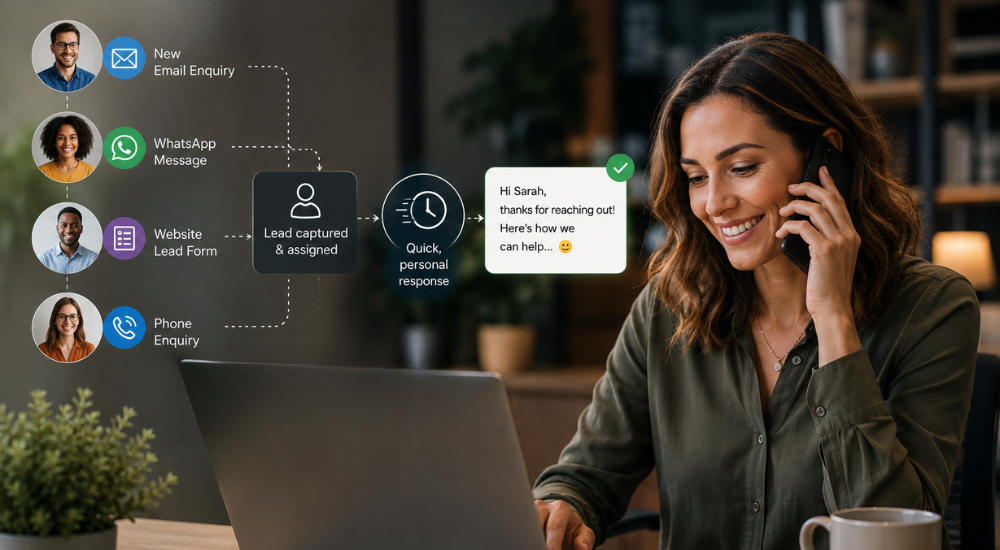
The best way to follow up quickly without losing quality is to create a response system before the lead arrives. That means having a clear process for what happens when someone enquires.
Who sees the lead first? How quickly should they respond? Which channel should be used? What information should be included? What happens if the lead comes in after hours?
Without a system, speed depends on luck. With a system, your team can respond consistently and confidently.
This does not need to be complicated. In fact, the strongest systems are often the simplest. A good setup ensures that every new lead is acknowledged promptly, assigned correctly and moved into a clear follow up flow.
Use templates as a starting point, not a final answer
Templates can save time, but they should never replace real communication. The smartest way to use them is as a starting point. They help your team respond quickly while still leaving room for personalisation.
A good template covers the essentials. It welcomes the lead, acknowledges their request and explains the next step. But it should also be adjusted to reflect the person’s context.
Even small details make a difference. Mentioning the service they asked about or responding directly to their question helps the message feel human. It shows you are not just reacting to a notification. You are engaging with a real person.
At iHeartMedia South Africa, we believe digital communication should still feel like communication, not administration.
Match the channel to the customer
Different channels create different expectations. A WhatsApp message usually calls for a quicker, more conversational tone. An email may allow for slightly more detail. A phone call can offer immediacy and reassurance when the lead is ready for a direct conversation.
The key is to follow up in a way that suits both the channel and the person. If someone reaches out through WhatsApp, replying two days later with a formal email misses the tone of the interaction. If someone submits a detailed quote request, a vague one line response may feel careless.
Fast follow up works best when it feels appropriate to the context.
Make the next step clear
One reason leads stall after follow up is that the message does not guide them anywhere. The response may be polite, but it leaves too much uncertainty. The customer is still wondering what to do next, how long the process will take or whether the business is truly ready to help.
A strong follow up creates direction. It lets the lead know what happens now. That could mean confirming a call, asking one or two clarifying questions, providing a timeline or inviting them to choose a suitable time to speak.
Clarity reduces hesitation. It also makes your business appear more organised and trustworthy.
Follow up beyond the first reply
Many businesses think follow up means one response. If the lead does not answer, the conversation ends. That is often a mistake.
People get distracted. They miss messages. They intend to reply later and forget. A gentle second or third follow up can recover opportunities that would otherwise be lost.
The important thing is tone. A good follow up should feel helpful, not pushy. It should remind the lead that you are available without making them feel pressured.
Consistency matters here. Businesses that stay present without becoming aggressive are often the ones that turn uncertain prospects into paying customers.
Human touch still wins trust
Technology can support your process, but human connection still closes the gap between enquiry and conversion. Customers want to feel like they are dealing with people who understand their needs, not just systems designed to move them along.
That human touch comes through in the way you write, the way you listen and the way you make the lead feel valued. It is in the extra sentence that reassures them. It is in the quick reply that respects their time. It is in the calm confidence of a process that feels professional without becoming sterile.
That balance is where better lead follow up happens.
Following up leads faster does not mean turning your business into a machine. It means respecting the moment when someone shows interest and making sure your response meets that moment well.
You can be efficient without being cold. You can use systems without sounding scripted. You can move quickly while still creating trust.
When businesses get this right, lead generation becomes far more valuable. Fewer opportunities slip away. Conversations start stronger. Prospects feel more confident. Sales become easier to move forward.
If your current follow up process is costing you leads, it may be time to rethink the journey after the enquiry. Contact iHeartMedia South Africa to create a smarter lead follow up strategy that keeps speed, clarity and human connection working together.
Want to turn more enquiries into real business without losing your brand personality? Let iHeartMedia South Africa help you build a lead follow up system that feels personal and performs properly.