Traffic used to be the trophy metric. Big numbers. Pretty dashboards. Monthly reports that made everyone feel productive.
Revenue is the only metric that pays salaries.
In 2026, digital marketing is no longer about chasing clicks. It is about building systems that convert attention into measurable income. AI has changed search behaviour. Paid media costs have increased. Organic reach on social platforms continues to shrink. The businesses that will win are those that focus on strategy, not vanity metrics.
Here is what will actually drive revenue in 2026.
- Revenue-First Strategy, Not Channel-First Thinking
Most businesses still plan marketing backwards. They decide to “do SEO” or “run Facebook ads” before asking what revenue target they need to hit.
In 2026, strategy must start with numbers:
- What is your monthly revenue goal?
- What is your average order value?
- What is your conversion rate?
- What is your customer acquisition cost?
- What is your lifetime customer value?
From there, you reverse-engineer the marketing plan.
For example, if you need R500,000 in monthly revenue and your average sale is R5,000, you need 100 sales. If your conversion rate is 2%, you need 5,000 qualified visitors. Not random traffic. Qualified traffic.
Revenue-first thinking forces clarity. It eliminates fluff campaigns that look good but do nothing for the bottom line.
- AI-Powered Personalisation at Scale
Generic messaging is dying.
In 2026, consumers expect tailored experiences. AI tools now allow businesses to personalise:
- Email campaigns based on user behaviour
- Website content based on traffic source
- Product recommendations based on browsing history
- Ad creatives based on audience segments
Personalisation improves engagement, but more importantly, it improves conversion rates.
Instead of driving 10,000 visitors and hoping for 2% conversion, imagine increasing that to 4% through better targeting and tailored messaging. That alone doubles revenue without increasing traffic.
The focus shifts from “How do we get more visitors?” to “How do we convert more of the visitors we already have?”
- SEO for Buying Intent, Not Just Volume
High-traffic keywords are tempting. They look impressive in reports.
But in 2026, smart SEO targets commercial and transactional intent.
Instead of chasing:
- “What is digital marketing?”
Focus on:
- “Digital marketing agency pricing in South Africa”
- “Best SEO agency for e-commerce”
- “Lead generation services for small business”
Lower search volume often means higher intent.
Additionally, AI-driven search tools prioritise structured, authoritative content. Businesses must:
- Build topical authority
- Optimise for conversational queries
- Implement structured data
- Create in-depth, high-value content
SEO is no longer about ranking for everything. It is about ranking for what converts.
- Performance Marketing with Profit Discipline
Paid media is not getting cheaper. CPMs are rising. Competition is aggressive.
In 2026, performance marketing must be disciplined.
This means:
- Clear cost-per-acquisition targets
- Ongoing creative testing
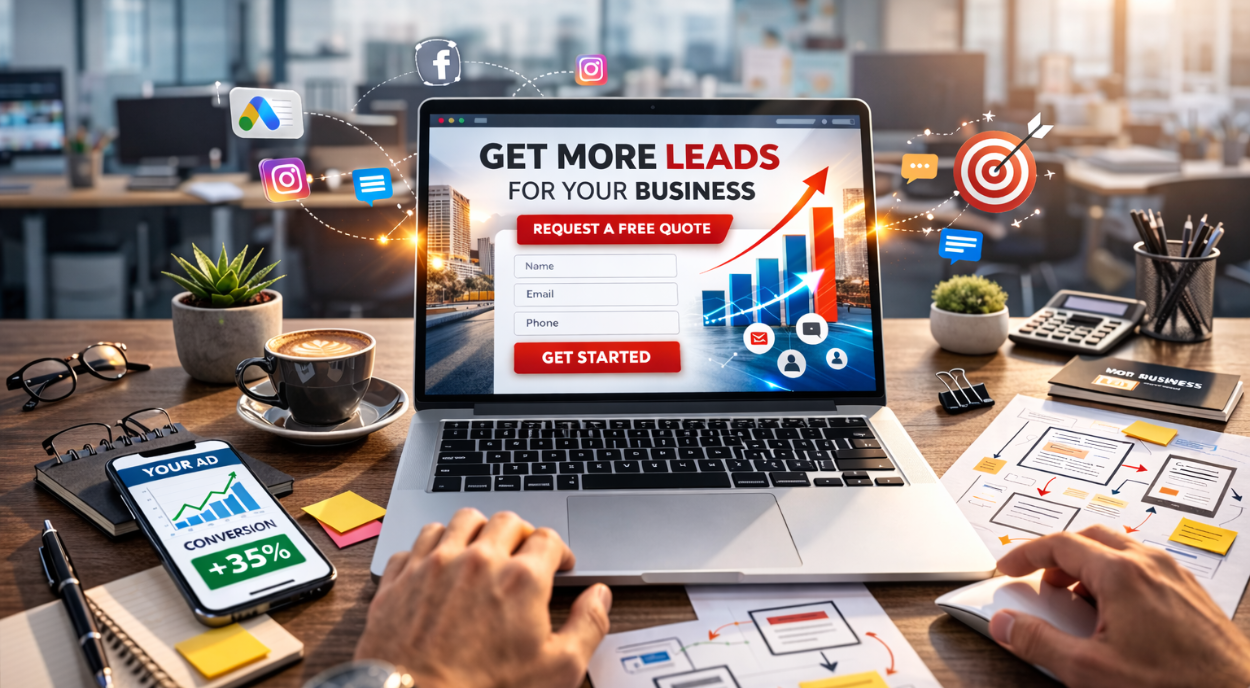
- Landing page optimisation
- Strong retargeting funnels
- Proper tracking and attribution
Too many businesses scale ad spend before fixing conversion leaks.
If your landing page converts at 1%, throwing more budget at ads simply amplifies inefficiency. Optimise first. Scale second.
Profitability matters more than impressions.
- Conversion Rate Optimisation Becomes Core Strategy
CRO used to be optional. Now it is central.
Small improvements in:
- Page load speed
- Mobile experience
- Headline clarity
- Call-to-action placement
- Checkout simplicity
can dramatically increase revenue.
For example, increasing conversion from 2% to 3% represents a 50% revenue increase without increasing traffic.
In 2026, businesses that treat their website as a sales engine, not just a digital brochure, will dominate.
- Content That Educates and Pre-Sells
Content marketing still works. But not the fluffy kind.
Educational content that addresses objections, explains processes and builds trust shortens the sales cycle.
High-performing content includes:
- Detailed guides
- Case studies with real results
- Industry insights
- Comparison articles
- FAQ pages addressing buyer concerns
When prospects arrive informed and confident, sales conversations become easier and close rates improve.
Content should not just attract traffic. It should move users closer to purchase.
- First-Party Data Becomes Gold
Privacy regulations and cookie restrictions continue to evolve. Third-party data is becoming unreliable.
In 2026, businesses must build and protect their own data assets:
- Email lists
- CRM systems
- Customer segmentation data
- Behaviour tracking within owned platforms
An engaged email list often generates higher ROI than paid social campaigns.
Owning your audience reduces dependency on algorithm changes and platform volatility.
- Integrated Marketing Ecosystems
Single-channel strategies are fragile.
The businesses driving consistent revenue integrate:
- SEO
- Paid media
- Email marketing
- Social media
- Conversion optimisation
- Marketing automation
Each channel supports the other.
For example:
SEO brings in high-intent traffic.
Retargeting ads re-engage visitors.
Email nurturing converts them.
Automation increases repeat purchases.
Revenue grows when the system works together.
- Focus on Customer Lifetime Value
In 2026, acquiring a customer is only step one.
True revenue growth comes from:
- Upselling
- Cross-selling
- Subscription models
- Loyalty programmes
- Retention campaigns
Increasing customer lifetime value often delivers higher returns than constantly chasing new leads.
A customer worth R2,000 once is good. A customer worth R10,000 over two years is a business asset.
The Bottom Line: Revenue Is the Real KPI
Digital marketing in 2026 is more measurable, more data-driven and more competitive than ever.
Vanity metrics will not sustain growth. Revenue-focused strategy will.
The businesses that win will:
- Set clear revenue targets
- Use AI for intelligent personalisation
- Focus on high-intent SEO
- Optimise conversion rates
- Build strong first-party data
- Integrate marketing channels
- Prioritise lifetime value
Traffic is useful. Revenue is survival.
If your digital marketing strategy is generating clicks but not consistent income, it is time for a shift.
At iHeartMedia, we build data-driven strategies designed to increase conversions, optimise acquisition costs and grow long-term revenue. From SEO and paid media to automation and conversion optimisation, our focus is simple: measurable business growth.
Contact us today to build a digital marketing strategy for 2026 that drives real results, not just impressive reports.